
Pseudofolliculitis Barbae (Razor bumps)
What Is Pseudofolliculitis Barbae?
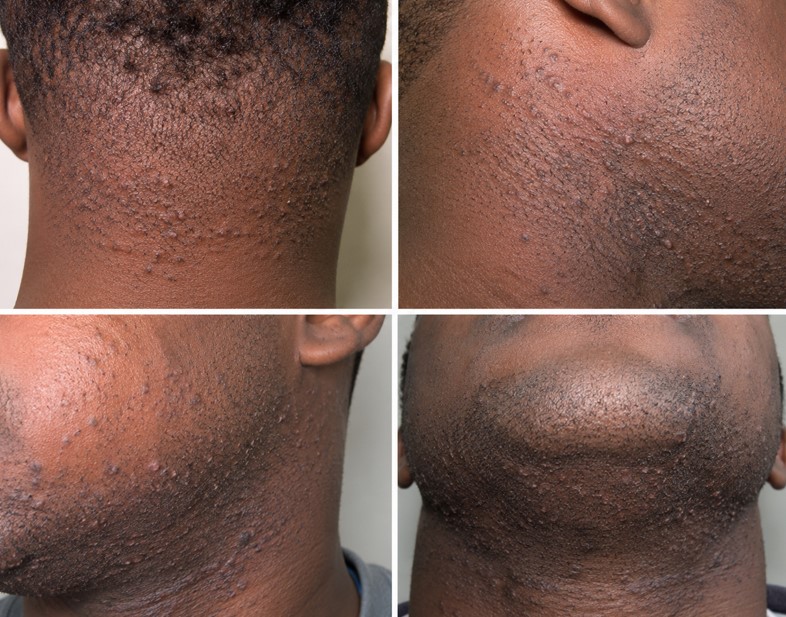
Pseudofolliculitis barbae (PFB), commonly known as razor bumps, is an inflammatory skin condition caused by ingrown hairs after shaving. It most often affects the beard area but can also occur anywhere hair is regularly shaved.
Pseudofolliculitis barbae develops when freshly cut hairs curl back and grow into the skin instead of growing outward. This triggers inflammation around the hair follicle, leading to red, irritated bumps and sometimes small pus-filled lesions.
The condition is most common in men with coarse, tightly curled hair, particularly Black men, but it can also affect women who shave areas such as the legs, underarms, or bikini line.
Causes & Risk Factors
Several factors increase the risk of developing razor bumps, including:
- Close shaving with a razor blade
- Coarse or tightly curled hair
- Frequent shaving
- Genetic predisposition
- Skin folds or existing scar tissue that encourage hairs to grow back into the skin
Symptoms
Common symptoms include:
- Small, firm bumps in the beard or shaved areas
- Redness and inflammation
- Tenderness or itching
- Ingrown hairs
- Small pustules (pus-filled bumps)
- Dark marks (post-inflammatory hyperpigmentation)
- Scarring or keloid formation in more severe or long-standing cases
Pseudofolliculitis barbae is usually diagnosed during a physical examination. In some cases, dermoscopy may be used to visualize ingrown hairs and distinguish razor bumps from bacterial folliculitis or other skin conditions.
Treatment
Treatment focuses on reducing inflammation, preventing new ingrown hairs, and improving shaving habits.
Temporary Shaving Break
Stopping shaving for several weeks allows existing ingrown hairs to grow out and inflammation to improve.
Better Shaving Techniques
- Use an electric razor or beard trimmer instead of a close blade shave.
- Avoid stretching the skin while shaving.
- Shave in the direction of hair growth.
- Avoid shaving too closely.
- Reduce shaving frequency when possible.
Topical Medications
Depending on the severity of your condition, your provider may recommend:
- Topical corticosteroids to reduce inflammation
- Clindamycin or erythromycin to decrease inflammation and bacteria
- Benzoyl peroxide washes or gels
- Retinoids (such as tretinoin) to help prevent ingrown hairs
Oral Medications
For more severe inflammation, oral antibiotics such as doxycycline may be prescribed to reduce inflammation and secondary infection.
Removal of Ingrown Hairs
Occasionally, trapped hairs can be carefully released in the office using sterile instruments. Patients should avoid digging or picking at ingrown hairs at home.
Laser Hair Removal
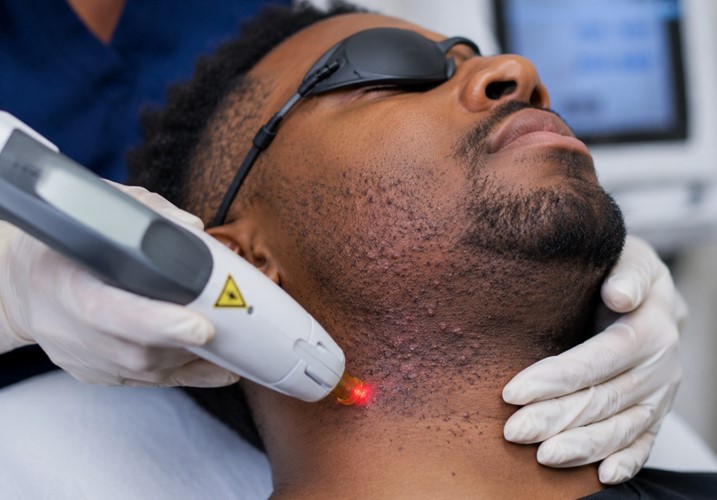
For patients with frequent or severe razor bumps, laser hair removal offers one of the most effective long-term solutions. By permanently reducing hair growth, laser treatments significantly decrease the number of ingrown hairs and future flare-ups.
Prevention
You can reduce your risk of developing razor bumps by:
- Avoiding very close shaving
- Using an electric razor or beard trimmer
- Shaving with the direction of hair growth
- Not stretching the skin while shaving
- Keeping the skin moisturized
- Gently exfoliating to remove dead skin cells
- Avoiding daily shaving if irritation develops
- Considering laser hair removal for persistent or recurrent cases
When Should You See a Dermatology Provider?
Schedule an evaluation if you have:
- Persistent razor bumps despite changing your shaving routine
- Painful or infected bumps
- Scarring or keloids
- Dark spots that remain after the bumps heal
- Frequent flare-ups that interfere with daily shaving
Early treatment can reduce inflammation, prevent permanent scarring, and improve the appearance of your skin.
Frequently Asked Questions
Are razor bumps the same as acne?
No. Razor bumps are caused by ingrown hairs, while acne develops from clogged pores and excess oil.
Are razor bumps contagious?
No. Pseudofolliculitis barbae is not contagious and cannot be spread to others.
Will razor bumps go away?
Most cases improve with proper shaving techniques and treatment. Long-standing cases may leave dark spots or scars if not treated early.
Can women get pseudofolliculitis barbae?
Yes. Women may develop razor bumps anywhere hair is shaved, including the legs, underarms, bikini area, or chin.
Is laser hair removal effective?
Yes. Laser hair removal is one of the most effective long-term treatments for recurrent pseudofolliculitis barbae because it reduces the number of hairs that can become ingrown.